Whispers of the wheel: the subtle influence of near-miss visuals on extended play sessions in jackpot environments
Mia Griffin · Oct 28, 2026
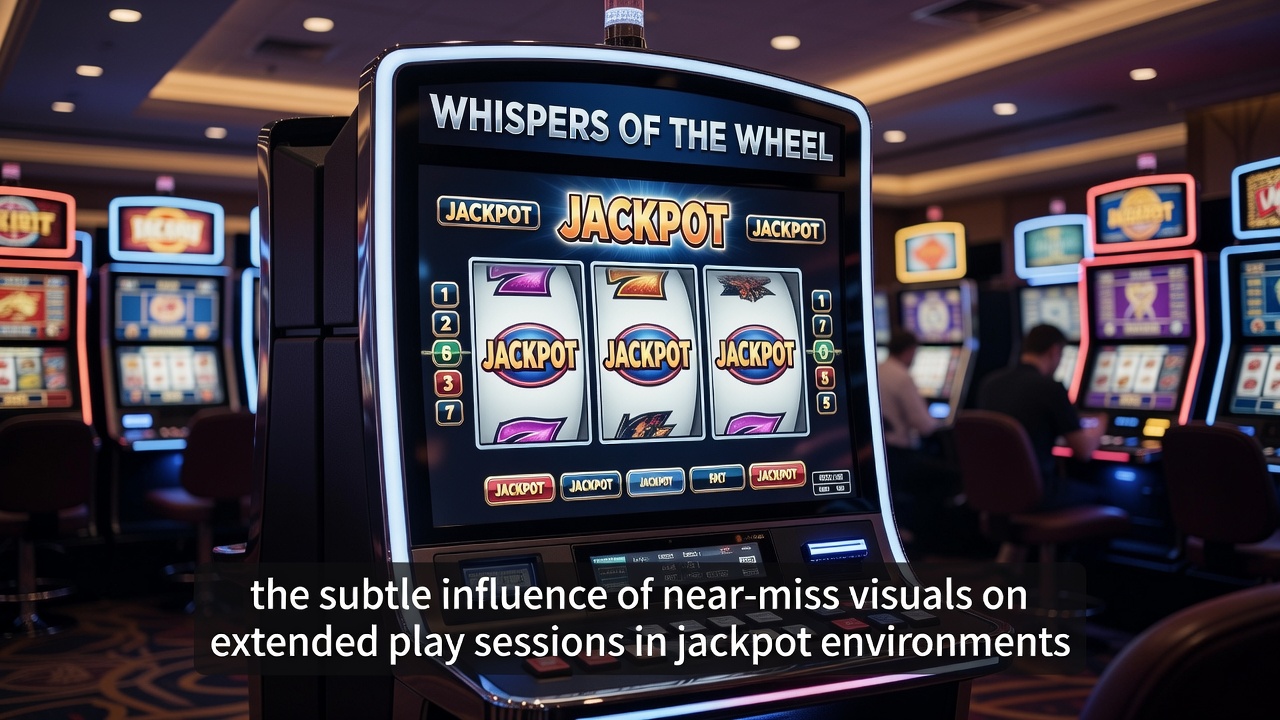
Whispers of the wheel: the subtle influence of near-miss visuals on extended play sessions in jackpot environments
Slot machines incorporate near-miss visuals where symbols align just short of a jackpot combination, and these elements appear across progressive and fixed jackpot titles in casino environments worldwide. Game developers design reel strips and symbol weights so that high-value icons land adjacent to winning positions more frequently than random chance alone would predict, and this pattern holds steady in both land-based cabinets and digital platforms. Observers note that players encounter these near-misses at rates several times higher than actual wins, yet the visual feedback remains identical to a successful outcome until the final reel stops.
Mechanics behind near-miss presentation
Reel mapping places jackpot symbols on adjacent stops while virtual reels or weighted algorithms control the final outcome, and manufacturers adjust these parameters during certification testing to meet jurisdictional standards. Lighting sequences, sound cues, and screen animations intensify when two or three jackpot symbols appear, then pause before revealing the non-win, and this staged presentation extends across multiple game themes. Progressive jackpot meters continue climbing during these sequences, which draws attention back to the accumulating prize pool even after the near-miss resolves.
Regulatory laboratories in multiple regions examine these configurations during game approval, and they verify that near-miss frequency stays within permitted ranges while still delivering the required return-to-player percentages. Data collected from electronic monitoring systems shows that sessions containing elevated near-miss events tend to record longer average durations before players end play, and this correlation appears consistently across different jackpot denominations.
Research findings on session length
Studies conducted at university laboratories track eye movements and decision latency during simulated play, and participants pause longer after near-miss outcomes than after clear losses or wins of equivalent value. One investigation from the University of Nevada Reno examined over 200,000 spins across multiple titles and recorded a measurable increase in continued betting following near-miss events, particularly when the jackpot meter exceeded a visible threshold. Researchers mapped these responses to changes in dopamine-related brain activity, noting patterns that resemble those observed in other forms of variable-ratio reinforcement.
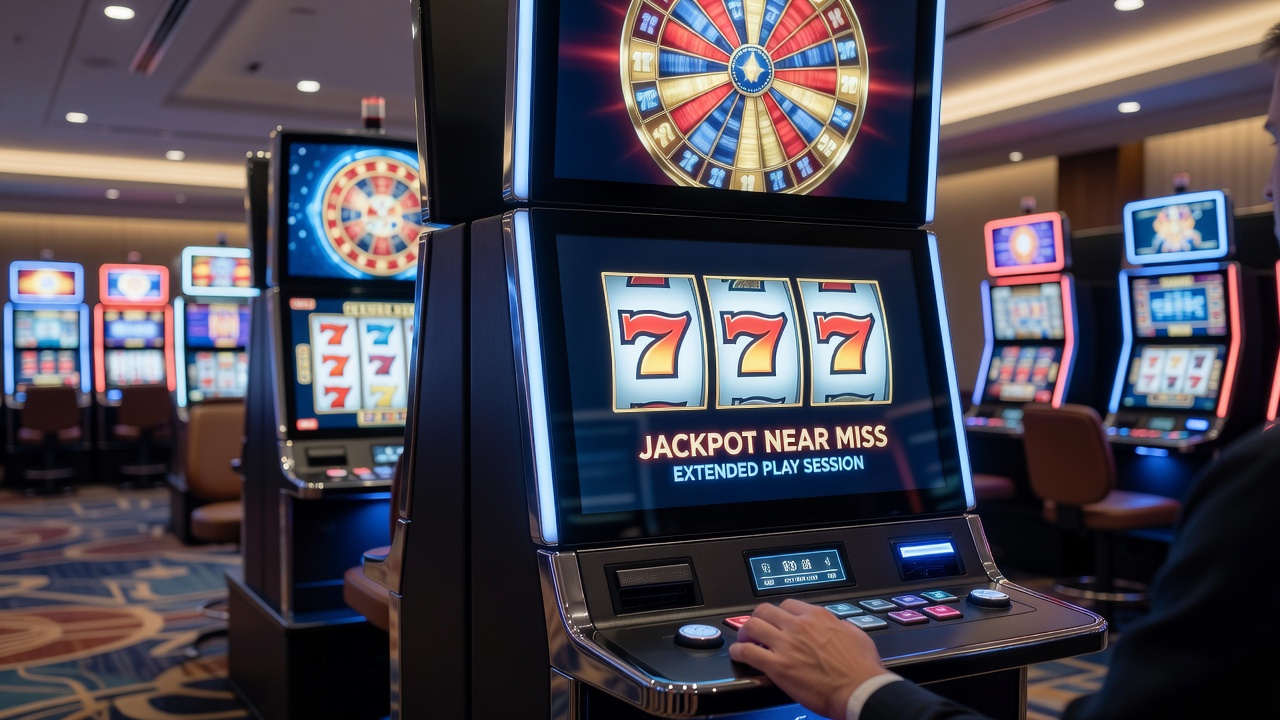
Further analysis from industry reports issued by the American Gaming Association indicates that near-miss frequency correlates with extended time-on-device metrics in both slot floors and online lobbies, and these patterns hold after controlling for jackpot size and bonus availability. Data from Australian state monitoring programs similarly shows elevated play duration in venues where progressive titles dominate the gaming mix, and operators use heat-mapping tools to confirm that machines with tuned near-miss visuals attract longer individual sessions.
Integration with jackpot environments
Progressive systems link multiple machines or sites into shared prize pools, and the visual display of rising meters reinforces the salience of near-miss moments because each almost-win appears connected to a larger accumulating total. Game mathematics places rarer symbols on higher-paying reels while maintaining near-miss density on lower reels, and this balance allows the jackpot to remain visible without triggering frequent payouts. Casino management systems log these events alongside bet size and session length, enabling operators to identify titles where near-miss density aligns with sustained player engagement.
Certification standards from bodies such as the Nevada Gaming Control Board require transparent disclosure of reel weighting and near-miss parameters, and independent testing houses verify compliance before titles reach casino floors. These requirements ensure that visual near-misses do not exceed specified thresholds, yet the permitted range still permits designers to create noticeable near-miss sequences that influence pacing within individual sessions.
Cross-platform observations
Mobile and desktop versions replicate the same reel mapping and animation timing as their land-based counterparts, and telemetry from remote gaming platforms records comparable extensions in session length following near-miss events. Developers adjust animation speed and sound layering for smaller screens while preserving the core psychological cue, and this adaptation maintains consistency across delivery channels. Market data from European operators shows similar session metrics in jurisdictions where remote and land-based products coexist under unified regulatory frameworks.
Conclusion
Evidence from laboratory studies, regulatory monitoring, and operational data demonstrates that near-miss visuals form a consistent feature of jackpot slot design and correlate with measurable extensions in play duration across multiple environments. Operators, regulators, and researchers continue to examine these patterns through electronic reporting systems and controlled experiments, and the resulting information informs both game approval processes and responsible gaming protocols. As jackpot networks expand and new titles launch, the relationship between near-miss presentation and session behavior remains a documented element of slot mathematics and player interaction data.