Expanding Reel Systems Redefine Win Frequency Metrics in Modern Digital Slots
Mara Jung · Aug 15, 2026
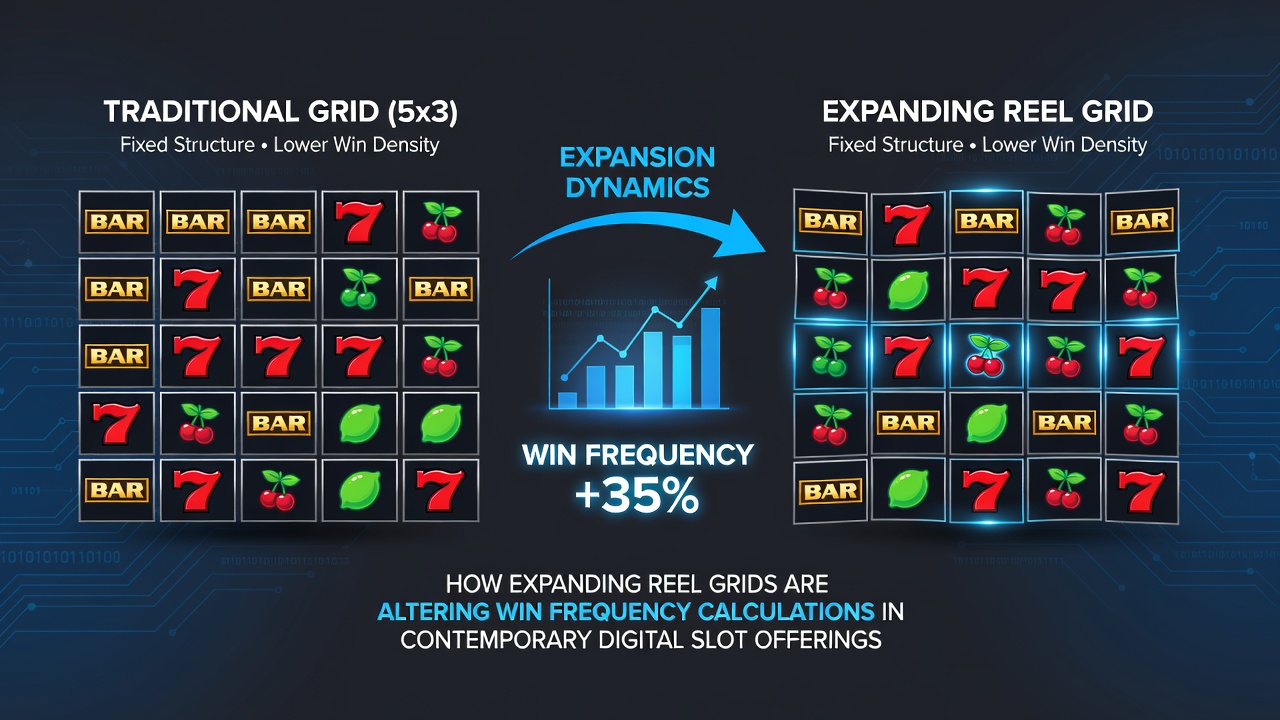
Expanding Reel Systems Redefine Win Frequency Metrics in Modern Digital Slots
Expanding reel grids operate through mechanisms that add rows or columns during spins, and this process directly changes how operators calculate hit rates and return-to-player percentages across contemporary platforms. Traditional fixed-grid slots rely on static reel dimensions that produce consistent probability distributions, whereas expanding formats introduce variable symbol positions that require updated algorithms to maintain regulatory compliance and balanced outcomes. Observers note that software providers adjust base game mathematics by recalibrating symbol weights and reel strip lengths each time new rows activate, which prevents unintended spikes in win frequency while preserving overall game integrity.
Mechanics Behind Grid Expansion
Developers implement expansion triggers through random number generators that evaluate conditions such as consecutive matching symbols or specific bonus symbols landing in view, and these triggers then extend the grid upward or sideways to create additional symbol positions. Data from industry reports shows that each added row multiplies the number of possible combinations without proportionally increasing the payout rate, because the underlying reel strips receive compensatory reductions in high-value symbols. Researchers at academic institutions tracking slot mathematics have documented that this compensation keeps theoretical return percentages within narrow bands even as visual complexity grows during extended sequences.
Payline structures shift from fixed lines to ways-to-win models or cluster pays once grids expand, and this transition forces programmers to recalculate hit frequency on the fly using real-time combinatorial formulas rather than precomputed tables. Those who've studied these systems find that hit frequency often rises modestly during expanded states because more positions become available, yet operators offset this by tightening the distribution of paying combinations across the enlarged grid. The result maintains session length expectations while delivering the visual spectacle that players encounter in current releases.
Adjustments to Win Frequency Calculations
Win frequency calculations incorporate dynamic weighting factors that scale with grid size, and these factors derive from Monte Carlo simulations run across millions of spins before a title reaches market. According to findings published by the Gaming Standards Association, developers now embed secondary random number generators specifically tasked with governing expansion depth, which prevents any single session from exceeding predetermined volatility thresholds. This layered approach replaces older single-generator models that could not account for variable reel heights.
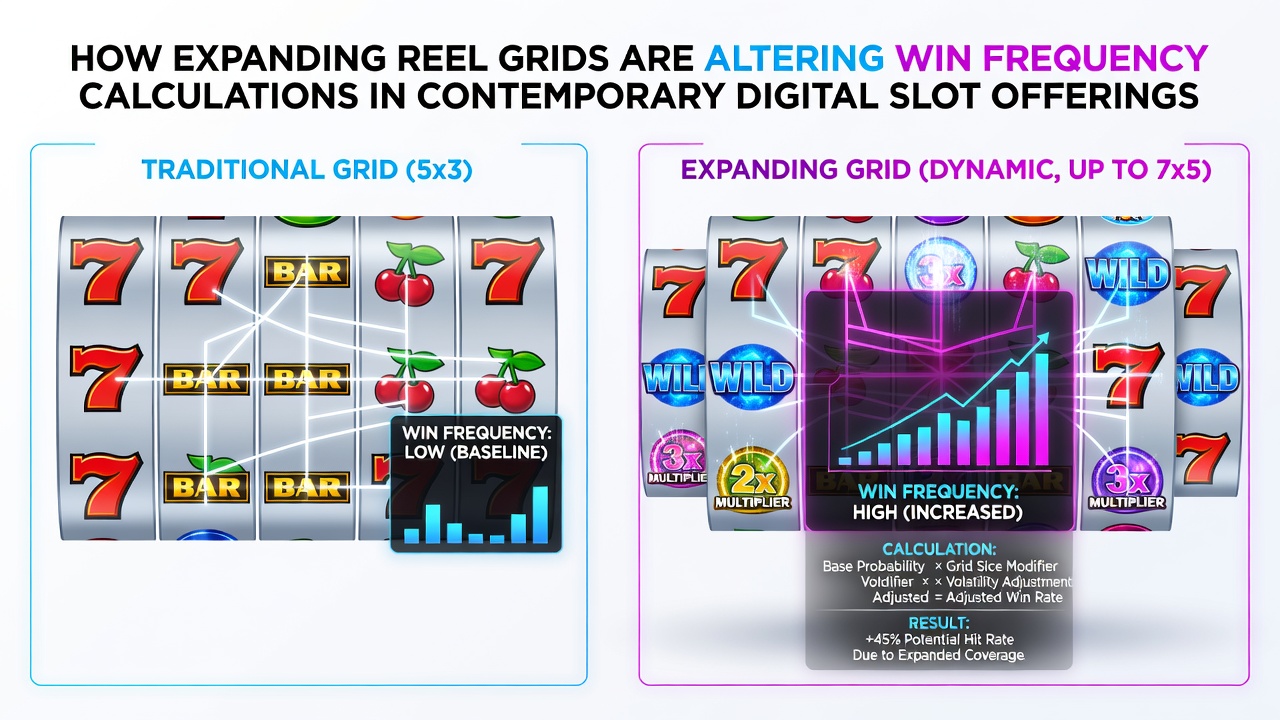
Probability tables update in segments: the base grid maintains one set of frequencies while expanded configurations activate separate tables that reflect the added positions. Figures released by the New Jersey Division of Gaming Enforcement in mid-2026 indicate that titles using expanding grids show hit frequencies ranging between 22 and 34 percent depending on expansion depth, compared with the narrower 18 to 25 percent range typical of fixed five-reel games. Regulators require transparent disclosure of these ranges in game rules to ensure players receive accurate information about expected outcomes.
Industry Implementation Patterns Observed in August 2026
Platform operators integrating expanding reel technology during August 2026 updates have reported measurable changes in average spin duration because expanded states generate longer evaluation cycles for the game engine. Software audits conducted by independent testing labs confirm that these longer cycles do not alter the overall return-to-player figure, yet they do redistribute smaller wins across more frequent partial expansions rather than concentrating them in rare full-grid events. Industry organizations such as the European Gaming and Betting Association have compiled comparative data across multiple jurisdictions showing consistent application of these redistribution techniques.
Case examples include titles that begin with a 5x4 grid and expand up to 5x8 during feature sequences, and each increment in height triggers an immediate recalculation of symbol occurrence rates on the affected reels. Observers tracking these titles note that the mathematical model treats the expansion as a temporary multiplier on reel length rather than a permanent alteration, which allows the base return percentage to remain stable across both contracted and expanded states. This modular structure simplifies compliance verification while enabling creative visual presentations.
Regulatory and Technical Considerations
Regulatory bodies outside the United Kingdom, including those in Australia and several Canadian provinces, require operators to submit updated probability reports whenever expansion parameters change, and these submissions must demonstrate that overall game fairness remains intact. Technical standards now mandate logging of grid state at every spin outcome so that post-audit reviews can reconstruct exact win frequency conditions. Such requirements have prompted providers to embed diagnostic tools directly into the game client that export expansion statistics for regulatory review.
Those responsible for game certification emphasize that expanding systems must preserve the same long-term return percentages as their fixed-grid predecessors, which necessitates precise balancing of symbol frequencies across all possible expansion levels. Data compiled by research teams at technical universities indicates that the computational overhead for these real-time adjustments remains minimal on modern servers, allowing widespread adoption without infrastructure strain.
Conclusion
Expanding reel grids continue to influence how win frequency metrics are derived and reported in digital slot offerings, and ongoing refinements in calculation methods reflect both technological capability and regulatory expectations. Developers maintain equilibrium by applying compensatory adjustments to reel strips and probability tables, while testing laboratories verify that these changes produce consistent outcomes across variable grid states. As platforms evolve through 2026 and beyond, the integration of dynamic expansion remains a core element in delivering varied visual experiences without compromising established fairness standards.